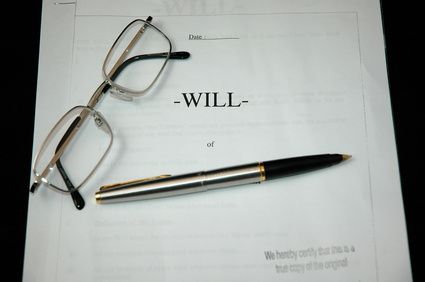
A) VALIDITY.
Any person can dispose of his estate anyway they see fit, as long as some formalities are met. These are defined in the Florida Probate Code and basically the requirements are:
a) that it is written (either by hand or typed)
b) that there are at least two witnesses present at the time it is made
c) that the one who disposes of his estate is over 18 and of sound mind
d) that the signature of the Testator is on the will
Further provisions of the law are:
a) All the signatures on the will must be placed in the presence of both the witnesses and the Testator.
b) The witnesses that co-sign a Will can be included in it as beneficiaries but it is better that they have no interest in the will.
c) Another person may sign the Will if the Testator is unable to do so due to physical incapacity, as long as both the Testator and the witnesses are present. This person must not be a witness and it must be clear that the signature is placed at the direction of the Testator.
d) Any changes, clarifications or amendments of a will after it was completed, are referred to as “codicils” and to be accepted by the state of Florida, must maintain the same formalities as the original will.
e) It is allowed for an emancipated minor to make a will.
B) DYING INTESTATE.
If someone dies without a will and the scenarios of:
a) a surviving spouse but no children
b) only children with the surviving spouse
exist, then the spouse receives the entire estate. If neither of the above are applicable, then the estate is cut in half, the spouse receives one half and the other half is distributed in the ways defined by the heritage scenarios in existence.
C) WILLS NOT RECOGNIZED
Wills that are:
a) Holographic, i.e. handwritten without witnesses
b) Nuncupative, i.e. verbally phrased in the presence of witnesses
are not recognized by the state of Florida even if they are recognized by the jurisdictions in which they were made.
As the heritage scenarios and the points of contention between an estate heirs can tie the estate in court for years, it is advisable to seek representation by experienced law firms such as Widerman and Malek’s that have the necessary knowledge and expertise on the subject.
Procedural rules can make or break an appeal. A recent decision from Florida’s Fifth District…
When the U.S. Patent and Trademark Office (USPTO) announced its new Streamlined Claim Set Pilot…
Do you jointly own property in Florida, but things aren’t going so well? Maybe it’s…
As of midnight on October 1, 2025, the United States government has shut down as…
If you've ever heard someone mention a Lady Bird Deed and thought, “Is that a…
Let’s face it, no one walks down the aisle thinking, “One day, I’ll be Googling…